
How Often Should You Seal Concrete in Northern Virginia
Concrete looks indestructible, which is exactly why sealing gets skipped. The slab does not complain, winter comes and goes, and the damage stays invisible until the surface starts flaking off in year eight. By then the cheap fix has quietly expired.
Sealing is the best dollar a homeowner can spend on existing concrete around Northern Virginia. Here is how often to do it, when in the year to schedule it, and how to tell whether your driveway or patio is already overdue.
How often should concrete be sealed in Northern Virginia?
Plan on sealing exterior concrete every two to three years in Northern Virginia, and seal new concrete for the first time about a month after the pour. Decorative and stamped surfaces sit at the two year end of that range, while penetrating sealers on plain concrete can stretch to five years or more between coats.
The schedule matters more here than in most of the country. Warrenton winters cycle above and below freezing dozens of times a season, and every cycle pushes water into unsealed concrete and pries at it from the inside. The sealer has one job, and it is keeping that water out.
Why our climate is hard on bare concrete
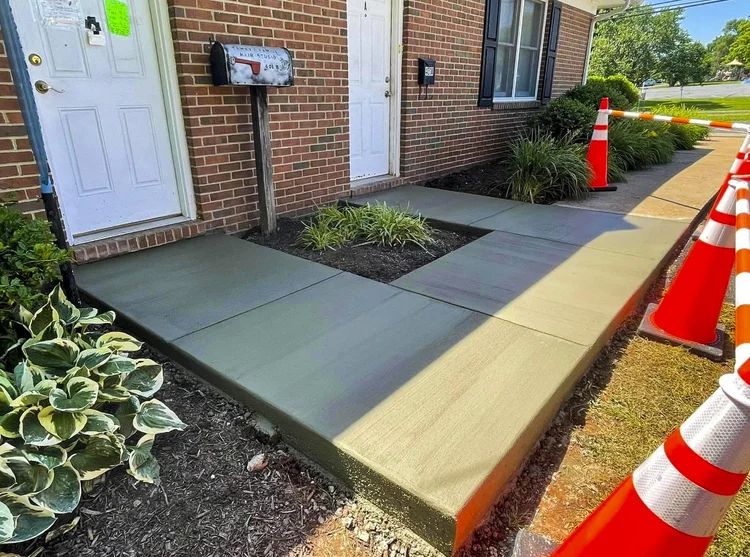
Concrete is porous, closer to a very hard sponge than to glass. Rain, snowmelt, and lawn irrigation soak into the surface, and in a Northern Virginia winter that trapped moisture freezes and expands roughly nine percent, breaking tiny pieces of the surface loose. Multiply that by a few dozen freeze and thaw cycles each winter and you get the scaling, flaking, and pitting that make a slab look decades older than it is.
Deicing salt makes everything worse. Salt from your own bag and the brine dripping off vehicles pulls extra moisture into the slab while attacking it chemically at the same time. A sealed surface sheds most of that water and salt before either can soak in, which is why two driveways poured the same summer can look ten years apart in age by their tenth birthday.
The water test and other signs it is time
The simplest check costs nothing. Pour a cup of water on the concrete. If it beads or sits on the surface, the sealer is still working. If the concrete darkens immediately as the water soaks in, the protection is gone and the slab is drinking every storm that passes through Fauquier County.
Watch for the other signals too. A chalky or dusty surface, fading color on stamped or decorative work, and the first traces of flaking near edges and joints all say the same thing. Catch it at this stage and sealing is still all you need. Wait through a few more winters and the conversation turns to resurfacing instead, at many times the price.
Fall is the smartest season to seal
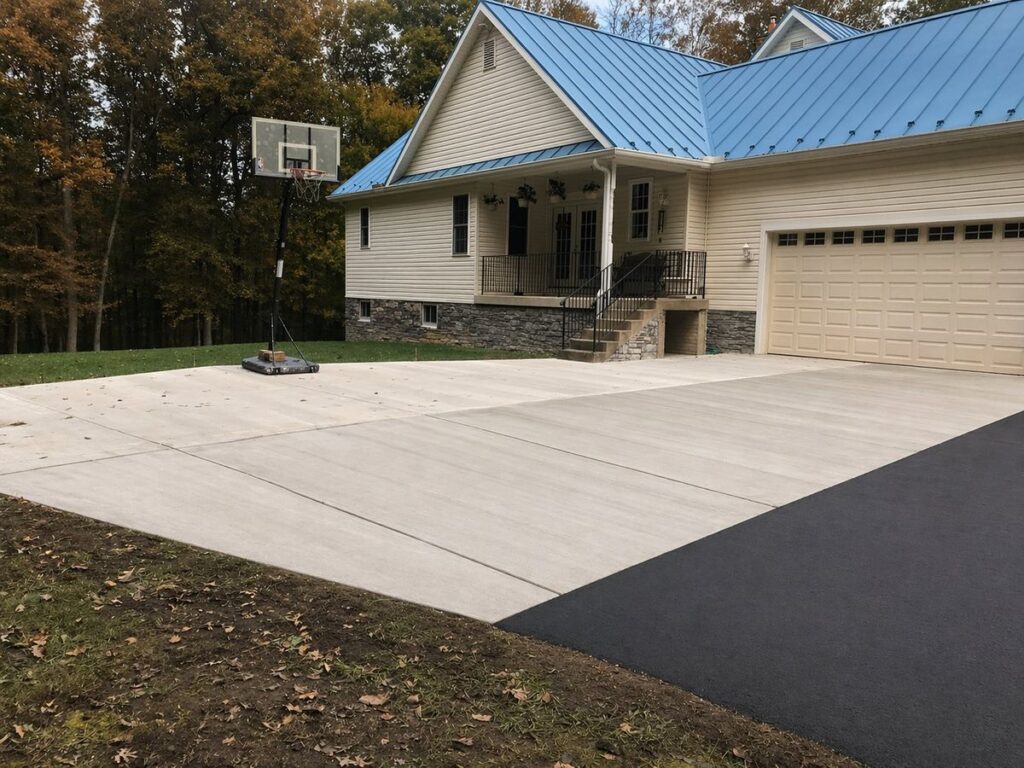
Sealing has a weather window. Most products want surface temperatures roughly between 50 and 85 degrees, a fully dry slab, and a dry day or two after application. In Northern Virginia that makes September and October nearly perfect, with summer humidity gone, rain more polite, and the work curing comfortably ahead of the first freeze.
There is strategy in the timing too. Sealing in the fall means your concrete goes into winter, the season that does the actual damage, wearing fresh protection. It is the same logic as putting new tires on before the snow rather than after it. Spring works fine as a backup window, but fall sealing protects the slab when protection matters most.
Doing it right, or having it done
Preparation decides the outcome. The slab needs a genuine cleaning first, and any oil, mildew, or failing old sealer has to come off or the new coat fails early. Product choice matters just as much. Penetrating silane and siloxane sealers are the workhorses for plain driveways and walkways, while stamped and colored work usually wants a film forming acrylic that revives the finish, applied thin in two coats.
A homeowner can absolutely handle a straightforward driveway with a rented sprayer and a dry weekend. It pays to bring in a pro for decorative concrete, for slabs already showing damage, and for anything where old sealer has to be stripped. Done properly, sealing day doubles as a free inspection, because whoever does the work sees every joint and crack up close before small problems become structural ones.
Bottom Line
Seal exterior concrete every two to three years around Warrenton, start about a month after any new pour, and favor fall so the protection is freshest when winter arrives. The water test tells you where you stand today. MG Minor Construction seals, maintains, and repairs concrete across Warrenton and Northern Virginia, and we will look at your driveway or patio and tell you honestly whether it needs sealing or something more. Reach out before the freeze and get it on the calendar.
Related reading: our concrete driveways services, Stamped vs Plain Concrete: Which Is Right for Your Home


