Class A Licensed | Family Owned | 25+ Years Experience

Author: Zackary Michael

Stamped vs Plain Concrete: Which Is Right for Your Home

Walk through any newer neighborhood in Warrenton or Gainesville and you will see both finishes doing their jobs. Plain gray concrete handles driveways and walkways without complaint, while stamped patios dress up backyards to look like slate, flagstone, or wood plank. Both started in the same mixer truck.

The choice between them is really a choice about budget, style, and how much upkeep you are willing to sign up for. Here is an honest comparison from crews that install both every season, so you can pick the finish you will still be happy with in year fifteen.

Is stamped concrete better than plain concrete?

Neither finish is better across the board. Stamped and plain concrete share the same structural recipe, so durability comes down to installation quality rather than finish. Plain broom finished concrete costs less, hides wear, and suits driveways and walkways. Stamped concrete costs more and needs faithful resealing, but delivers a high end look for far less than natural stone.

In other words, you are not choosing between a strong option and a weak one. You are choosing between a workhorse finish and a showpiece finish, and around Northern Virginia both perform for decades when they are poured on a proper base with the right mix.

Is stamped concrete better than plain concrete?, MG Minor Construction

What each finish actually is

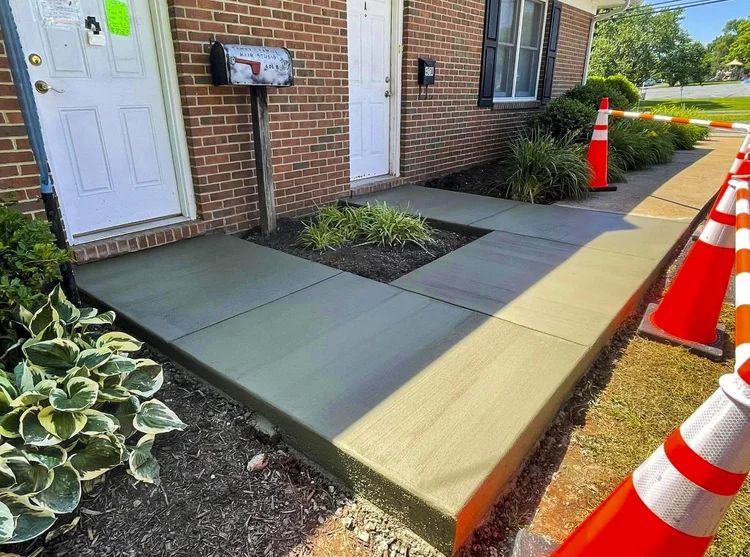
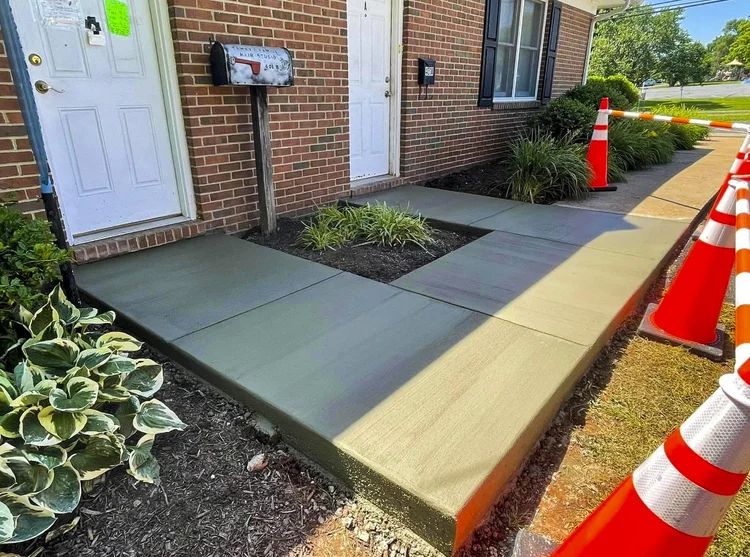
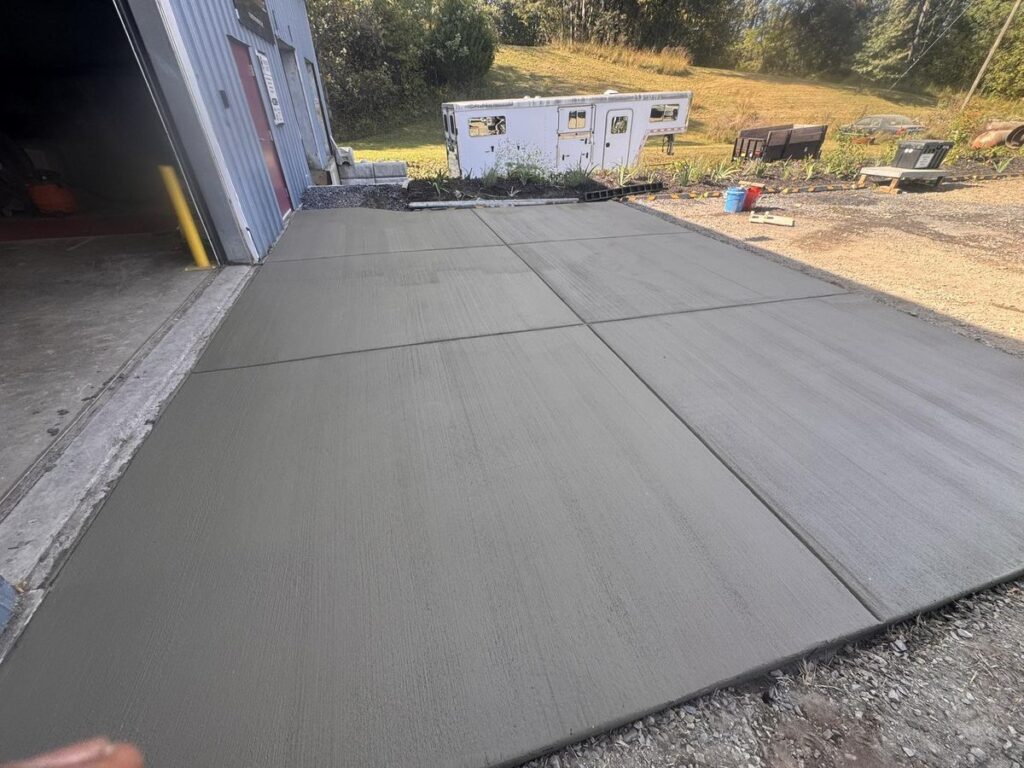
Plain concrete usually means a broom finish. After the slab is placed and floated, the crew drags a broom across the surface, leaving a fine texture that gives shoes and tires grip in the rain. It is the standard for driveways, sidewalks, and utility slabs because it is economical, slip resistant, and easy to repair or extend later without an obvious mismatch.

Stamped concrete takes the same slab and treats the surface as a canvas. Color goes in through the whole mix or gets worked into the top as a hardener, then the crew presses large stamps into the wet surface to create stone, slate, brick, or plank patterns. A release agent adds the shadowing that makes the texture read as natural, and a sealer locks in the color. The result mimics materials that would cost two or three times as much installed.

The cost gap and what it buys

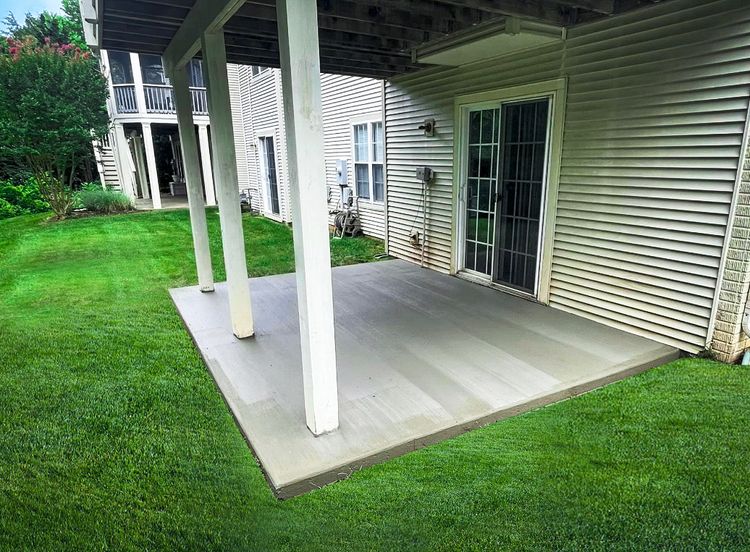
Around Warrenton, a standard broom finish typically runs $8 to $14 per square foot installed, while stamped work runs $14 to $25 or more depending on the pattern, coloring, and site. On a 300 square foot patio, that is roughly the difference between $3,000 and $6,000 at the midpoints, so the finish decision is a real budget line, not a rounding error.

What the extra money buys is labor and material you can see. Stamping takes a bigger crew moving fast while the concrete is workable, plus coloring, release, detail work at the borders, and sealing. Compare it against pavers or natural flagstone, though, and stamped concrete usually lands well under both while skipping the weeds and shifting that show up between paver joints over time.

The cost gap and what it buys, MG Minor Construction

Maintenance and winter performance

Plain concrete is about as low maintenance as a hard surface gets. Seal it every two to three years, keep harsh deicers off it, and it quietly does its job. Because there is no color layer, surface wear stays invisible, and small repairs blend in as the slab ages.

Stamped concrete asks a little more of you. The sealer is what keeps the color rich and protects the textured surface from freeze and thaw damage, so plan on resealing every two to three years without fail. Skip that and the finish fades and wears unevenly, which is where most stamped concrete horror stories come from. Sealed surfaces can also get slick, so quality installers add a traction additive on patios and pool decks. Give stamped work its maintenance and it holds its looks through decades of Virginia winters.

How to choose for your project

Think about the job the slab does. Driveways favor plain concrete, because tires, salt spray, and daily wear punish decorative finishes, and a driveway sized stamped pour carries a driveway sized premium. Patios flip the logic. A patio is an outdoor room you look at every single day, so the upgrade earns its keep there in a way a utility slab never will.

Plenty of Warrenton homeowners land in the middle. A broom finished field wrapped in a stamped border, or a stamped patio beside a plain walkway, captures the look at a friendlier number. Bring your real budget to the estimate and a good contractor will show you what it can build, with pattern and color samples you can hold rather than adjectives.

Bottom Line

Stamped and plain concrete are the same slab underneath, so pick by budget, use, and appetite for resealing. Plain broom finish is the durable value pick for driveways and walkways, stamped is the showpiece for patios and pool decks, and the two mix beautifully on a single project. MG Minor Construction installs both across Warrenton, Gainesville, Manassas, and the rest of Northern Virginia, and we bring samples to every estimate. If you are weighing finishes for a project this fall, reach out and we will price both options side by side.

Related reading: our concrete driveways services

How to Choose a Concrete Contractor in Warrenton

Concrete is the least forgiving trade to hire badly. If a paint job disappoints, you repaint. If a slab is poured wrong, the only real fix is a jackhammer, a dumpster, and paying for the whole job twice. That makes choosing the contractor the single most important decision in any concrete project.

The good news is that quality concrete contractors are easy to identify once you know what to check. Here is the vetting process we would use on our own house, written for homeowners in Warrenton and the surrounding Northern Virginia area. It works for driveways, patios, walls, and anything else that arrives in a mixer truck.

How do you choose a concrete contractor in Warrenton, VA?

Verify a Virginia contractor license and active insurance, look at finished local projects instead of stock photos, compare detailed written quotes on specifications rather than totals, and ask how the crew handles base preparation, joints, and curing. Contractors who answer those questions easily and specifically are the ones who do the work right.

That is the whole framework. Every step below is just the detail of how to run it, and the entire process takes less time than the project will spend on your calendar waiting for a pour date.

How do you choose a concrete contractor in Warrenton, VA?, MG Minor Construction

Check the license and insurance before anything else

Virginia contractors are licensed through DPOR, and you can verify any license number online in minutes. The license class also tells you the size of project the contractor is qualified to take on. A legitimate outfit will volunteer this number, and hesitation here is all the answer you need.

Then ask for current certificates of liability insurance and workers compensation. Concrete work involves heavy trucks, heavy material, and your property. If an uninsured crew member is hurt on your job or a truck cracks your existing driveway on the way in, insurance is what keeps that from becoming your bill. This step is boring, and it protects you more than any other. Reputable contractors carry these documents to every estimate because they get asked for them constantly.

Judge the portfolio like a local

Anyone can fill a website with beautiful concrete photos, and some of those photos have appeared on a dozen different websites. What you want is local proof. Ask for addresses of past projects around Warrenton, Gainesville, or Manassas you can drive past, and ask specifically for work that is five or more years old.

Age is the honest test, because fresh concrete all looks good. Mature work shows you how the contractor’s slabs handle Northern Virginia winters. Look at the edges, the consistency of the finish, and whether cracking has stayed neatly inside the control joints. A contractor proud of their old work will happily point you to it, and that pride is exactly the trait you are hiring. References work the same way, and a five minute call with a past client answers questions no photo can.

Judge the portfolio like a local, MG Minor Construction

Compare quotes on the details, not the bottom line

Get your bids in writing and read past the total. A meaningful concrete quote specifies slab thickness, the PSI rating of the mix, the reinforcement plan, the depth and compaction of the gravel base, and how joints will be handled. Two quotes with identical totals can describe two very different slabs. The quote is your only look at the parts of the job that end up buried.

This is also where lowball bids expose themselves. When one number is dramatically below the rest, the missing money usually comes out of the base, the thickness, or the mix, which are precisely the things you cannot inspect after the pour. Make every bidder answer the same spec questions and the field sorts itself quickly. Keep those answers in writing with the bid, since the spec sheet becomes your accountability document after the pour.

Ask what happens after the pour

The pour is the loud part, but the cure is where strength comes from. Ask each contractor how they cure and protect new concrete, when you can walk and drive on it, and whether sealing is included or recommended later. Clear, confident answers here separate craftsmen from crews that chase the next job the moment the truck leaves.

Finally, get the warranty in plain terms: what is covered, for how long, and what the process looks like if a problem appears. Hairline cracks are normal in concrete and any honest contractor will say so, but they should also stand behind their base work and structural quality. A contractor who explains both sides of that honestly is one you can trust with the slab. Make sure the warranty terms live in the contract rather than in conversation.

Bottom Line

Choosing a concrete contractor in Warrenton comes down to a verified license and insurance, aged local work you can see for yourself, itemized quotes compared spec by spec, and straight answers about curing and warranty. Run that checklist and the right choice usually becomes obvious. MG Minor Construction welcomes every one of those questions, and we will put our local work around Warrenton and Northern Virginia up against anyone’s. When you are ready to talk about your driveway, patio, or wall, reach out for an itemized quote.

Related reading: Best Time of Year to Pour Concrete in Northern VA, Do You Need a Retaining Wall: Signs to Watch For

Do You Need a Retaining Wall: Signs to Watch For

Northern Virginia was not built on flat land. From the hills around Warrenton out through Gainesville and Haymarket, plenty of beautiful lots come with real slopes, and slopes come with physics. Soil wants to move downhill, and given enough rain, it will. Every July thunderstorm proves the point somewhere in Fauquier County.

A retaining wall is how you tell the ground where to stop. The trick is recognizing when your yard has started asking for one, because the signs show up long before anything dramatic happens. Here is what to watch for.

How do you know if your Warrenton home needs a retaining wall?

Watch for soil washing out after storms, mulch or gravel that keeps sliding downhill, water pooling against your foundation, slopes creeping toward the house or driveway, and any existing wall that leans, bulges, or cracks. Each of those means the ground is moving, and moving ground does not stop on its own.

None of these signs are emergencies on day one. That is exactly what makes them easy to ignore, and exactly why the homeowners who act on them early spend far less than the ones who wait for the slope to make the decision for them.

How do you know if your Warrenton home needs a retaining wall?, MG Minor Construction

Erosion that gets worse with every storm

The clay heavy soil around Warrenton absorbs water slowly, which means a hard summer storm sends most of its rain racing across the surface, carrying soil with it. If you see small gullies cutting into a slope, tree roots gradually becoming exposed, or dirt and gravel washing onto your walkway after every downpour, erosion has picked its path.

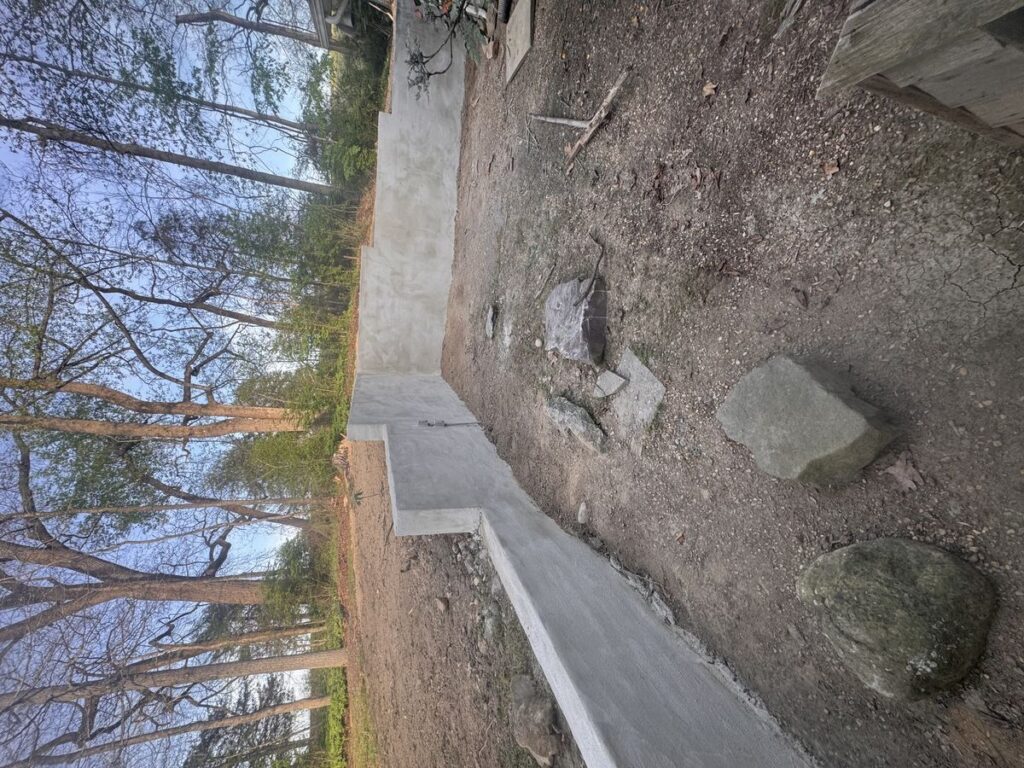
Each storm digs that path a little deeper, and replacing mulch every spring is treating the symptom. A properly placed retaining wall breaks the slope into terraces, slows the water down, and holds the soil where you paid for it to be. As a bonus, terraced ground turns unusable hillside into flat, plantable, livable yard. Many of our Warrenton wall projects started as erosion complaints and ended as the best usable space on the property.

Water going where it should not

Grading and drainage problems love to masquerade as landscaping problems. Water pooling near the foundation, a section of yard that stays soggy for days, or moisture showing up in the basement after storms all point to ground that is directing water toward your house instead of away from it. In winter, that same water freezes against the foundation and compounds the problem.

A retaining wall built with proper drainage changes that math. Quality walls are more than stacked material: they include gravel backfill and drain pipe that collect water behind the wall and move it somewhere harmless. That hidden drainage layer is the difference between a wall that lasts generations and one that becomes its own problem, and it is a big part of what you are paying a professional crew for.

Water going where it should not, MG Minor Construction

Slopes and structures getting too close

Ground creep is slow but relentless. Fence posts that used to stand straight begin to tilt, the edge of a driveway starts dropping or cracking as the ground beside it sinks, and a shed or patio at the base of a hill slowly collects the hillside. These are all signs the slope is moving toward something you care about.

Anywhere soil movement meets a structure, a retaining wall earns its cost quickly. Rebuilding a driveway edge or releveling a patio costs far more than holding the ground back in the first place. If you are planning a new patio, pool, or addition on a sloped Warrenton lot, plan the wall at the same time, since regrading is a whole lot easier before the concrete goes down. Good site planning solves in one mobilization what reactive fixes spread expensively across three.

An existing wall on its way out

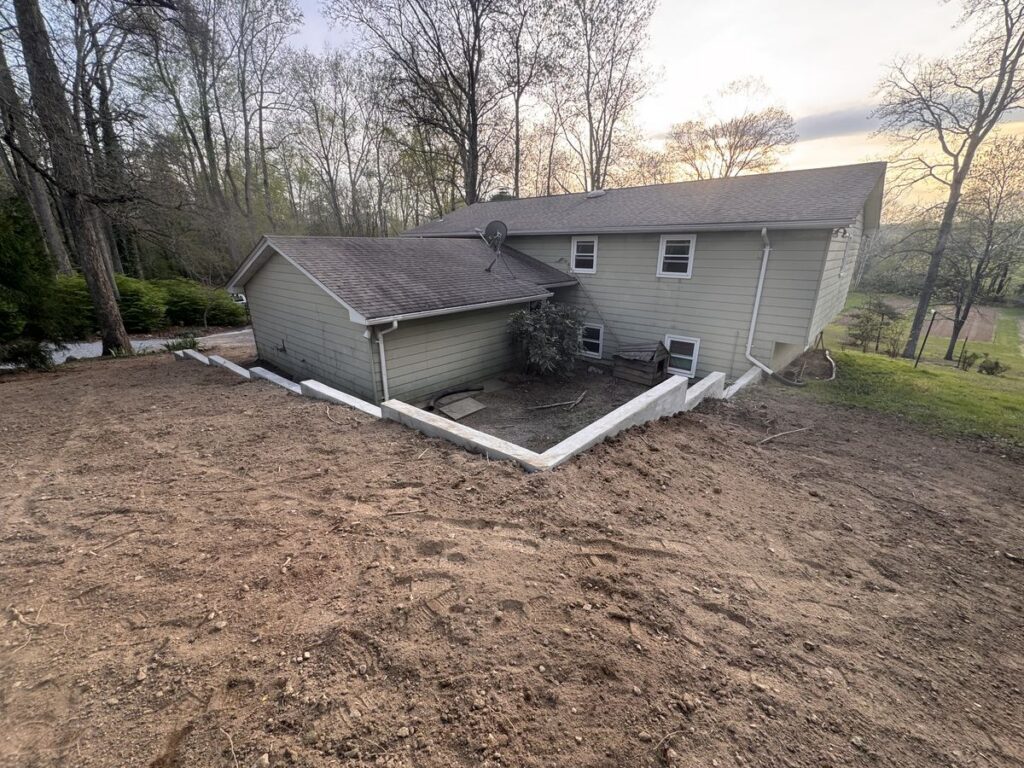
Many Northern Virginia homes already have retaining walls, and plenty of them are aging out. Timber walls from decades past rot from the soil side and rarely last much beyond twenty years. Block and stone walls fail more slowly, but a lean you can see, a bulge in the middle, stair step cracks in mortar, or soil leaking through gaps all say the wall is losing its grip. If you are unsure whether movement is active, take a photo now and compare it after a wet month.

A leaning wall never straightens itself, and full failure tends to arrive during the same soaking storm that stresses everything else. Replacing a failing wall on your schedule is a controlled, plannable project. Cleaning up a collapsed one, along with everything it was holding, is not. Taller replacements may also need engineering and permits, which a professional builder handles as part of the job.

Bottom Line

Washouts, sliding slopes, pooling water, and a leaning or cracking wall are your yard’s early warnings, and catching them early keeps the fix affordable. A well built retaining wall stops the movement, manages the water, and often hands you usable yard you did not have before. MG Minor Construction designs and builds retaining walls across Warrenton and Northern Virginia with the drainage and base work that make them last. If your slope is showing any of these signs, have us take a look before the next big storm does.

Related reading: What a New Concrete Patio Costs in Warrenton, Best Time of Year to Pour Concrete in Northern VA

Best Time of Year to Pour Concrete in Northern VA

Concrete has a strong opinion about weather. Pour it on the right day and it cures into a slab that outlasts your mortgage. Pour it on the wrong day without the right precautions and it can be compromised before the finishing crew packs up.

Homeowners around Warrenton ask us about timing constantly, usually while planning a driveway or patio. Here is how the seasons in Northern Virginia treat fresh concrete, and how experienced crews stretch the calendar safely. If you remember one thing, remember that the forecast matters more than the month.
When is the best time to pour concrete in Northern Virginia?

The ideal window around Warrenton runs from mid spring through mid fall, when daytime temperatures sit roughly between 50 and 85 degrees. April through June and September through October are the sweet spots. Skilled crews can pour outside that window, but fresh concrete must be protected from both freezing and extreme heat while it cures.

Why those numbers? Curing is a chemical reaction between cement and water, and temperature controls its speed. Too cold and the reaction stalls, or worse, the water in the mix freezes and wrecks the slab from inside. Too hot and the surface dries faster than the concrete underneath can keep up. The first week of curing matters most, and the first two days matter most of all.

When is the best time to pour concrete in Northern Virginia?, MG Minor Construction

Spring and fall, the prime pouring seasons

Mid spring in Northern Virginia offers mild days, cool nights that stay above freezing, and concrete that cures steadily into full strength. The one wrinkle is rain, since a storm on fresh concrete can damage the finish. Good contractors around here watch the radar all week and are not shy about moving a pour date, which is a habit you want, not an inconvenience.

Early fall might be even better. Temperatures are steady, humidity drops, and rain is generally more polite than in spring. The key is finishing far enough ahead of the first hard frost that the slab gains real strength before winter arrives, which is why September and October pours are some of the smoothest jobs on our calendar. Fall slabs also get a full winter to cure before facing their first hot summer, and concrete appreciates that.

Summer pours, manageable with the right crew

Plenty of concrete goes down around Warrenton in July and August, it just demands respect. Heat speeds everything up, giving the crew less working time and pulling moisture out of the surface too quickly, which invites shrinkage cracks. This is where experience is visible in the schedule itself. The pour you want starts at 6 AM, not at noon.

Crews that know what they are doing start summer pours at first light, adjust the mix for the heat, and keep the slab damp through the early cure with wet curing or curing compounds. Handled that way, a summer slab performs just as well as a spring one. Handled casually, summer is the fastest way to a cracked patio. Ask anyone bidding summer work how they plan to cure the slab, and listen for specifics rather than reassurance.

Summer pours, manageable with the right crew, MG Minor Construction

Winter pours, possible but demanding

Cold weather concrete is a real discipline, and sometimes a project cannot wait for April. Below about 40 degrees, crews switch to heated mix water, accelerating additives, and insulated curing blankets that hold the slab’s own heat while it gains strength. Done properly, winter concrete cures strong.

The one thing no technique can overcome is frozen ground. Concrete poured over a frozen base will settle when that base thaws, and no blanket fixes that. Winter work also moves slower and costs a bit more because of the added materials and care, so unless the schedule demands it, most Warrenton homeowners are better served waiting for the spring window. The exception is interior work like garage and basement slabs, which pour happily in any month.

Book before the season, not during it

Here is the practical tip that saves people the most frustration: contractor calendars in Northern Virginia fill up fast once the weather turns. Homeowners who start calling in May for a June patio often find every quality crew booked into late summer.
The smart play is planning in winter. Get your quote, settle the design, and claim an early spring slot before the rush. That timing also leaves room for the unglamorous prep work, like HOA approvals in many Fauquier and Prince William County neighborhoods, utility marking, and permits where required, none of which you want to discover in the week you hoped to pour. Winter planning also means unhurried design decisions, which is when the best patios get drawn.

Bottom Line

Spring and fall are the best seasons to pour concrete around Warrenton, summer works with an early start and careful curing, and winter is possible with the right cold weather methods and an unfrozen base. Timing the calendar is easy, and the harder part is booking a quality crew before everyone else does. MG Minor Construction schedules driveway, patio, and flatwork pours across Northern Virginia year round. If you have a project in mind for this year, reach out now and get the date locked in.

Related reading: our concrete driveways services, How Long Does a Concrete Driveway Last in Northern VA, What a New Concrete Patio Costs in Warrenton

What a New Concrete Patio Costs in Warrenton

A patio is one of the few home projects you get to enjoy the day it is finished and every summer evening after. It is also one of the projects where quotes can swing wildly, leaving Warrenton homeowners wondering what a fair price even looks like.

So here are real numbers for our area, what pushes them up or down, and why the lowest bid on the table is often the most expensive one over time. By the end, you will know what your yard should cost and why.

How much does a concrete patio cost in Warrenton, VA?

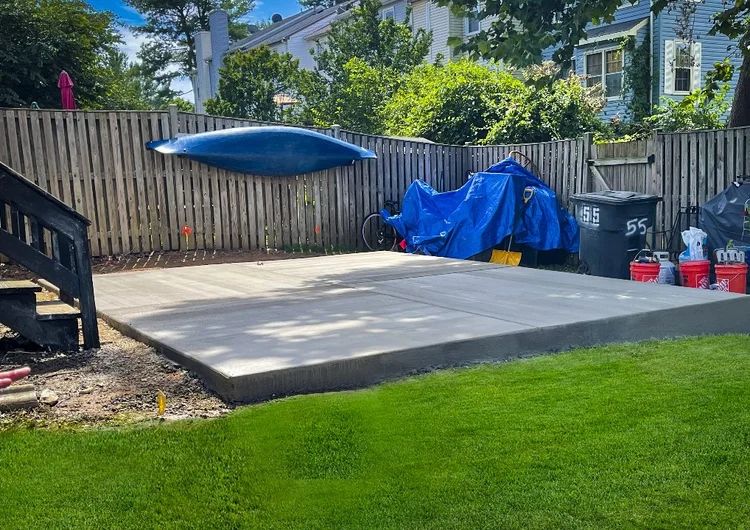
Most concrete patios in Warrenton and Northern Virginia run $8 to $14 per square foot for a standard broom finish, and $14 to $25 or more per square foot for stamped or decorative work. A typical 300 square foot patio lands somewhere between $2,500 and $7,500 depending on finish and site conditions. Prices vary by project, so treat these as planning numbers, not a quote.

The spread is wide because a patio is really two projects: the slab everyone sees and the site work nobody does. Two identical patios can carry very different price tags once slope, access, and soil enter the picture. That is why phone quotes are guesses and site visits produce real numbers.

How much does a concrete patio cost in Warrenton, VA?, MG Minor Construction

What actually drives your patio price

Size sets the baseline, but site conditions set the surprises. A flat backyard with easy truck access is the best case. A sloped yard that needs cut and fill, a tight gate that forces the crew to wheelbarrow concrete around the house, or an old patio that needs demolition and hauling all add real labor to the job. Even soil matters, since wet clay that refuses to compact can call for extra stone before anyone can pour.

Then come the structural choices: thickness, reinforcement, and the gravel base under it all. Around Warrenton, our clay soil and freezing winters make a compacted base and a proper air entrained mix necessities rather than upgrades. A detailed quote will list all of it, which is exactly how you compare bids fairly. When a quote is vague about the base, assume the price got there by shrinking it.

Finish options from simple to showpiece

A broom finish is the workhorse: clean, slip resistant, and the most budget friendly way to get a quality slab. Exposed aggregate adds texture and character for a modest bump. Integral color runs the price up a little more while keeping the classic concrete look.

Stamped concrete is the showpiece tier, pressed with patterns that read as flagstone, slate, or wood plank at a fraction of the cost of the real materials. It takes more labor, coloring, and sealing, which is why it sits at the top of the range. Many of our Northern Virginia clients mix tiers, using a stamped border around a broom finished field to get the look without the full stamped price. Sealed properly, decorative finishes hold their color through Virginia winters and clean up with a garden hose.

Finish options from simple to showpiece, MG Minor Construction

Why the cheapest bid usually costs the most

When a bid comes in far under the others, the savings have to come from somewhere you cannot see: a thinner slab, a skipped or loosely compacted base, bargain mix, or joints cut as an afterthought. The patio looks identical on day one. The difference shows up by winter three, when settling and freeze damage start writing their own invoices.

Concrete is unforgiving of shortcuts because fixing it means replacing it. There is no patching your way out of a slab poured on a bad base. Paying a fair price once for correct work is genuinely the cheap option, which is easy to say and easy to prove when you look at what early replacement costs. If a bid seems too good, ask that contractor to walk through their base depth and mix specs line by line, and watch how the conversation goes.

How to budget smart in Northern Virginia

Get two or three itemized quotes and compare the specs, not just the totals: thickness, PSI rating, reinforcement, base depth, and what the finish includes. Ask each contractor the same questions and the honest answers will sort themselves quickly.

Timing helps too. Booking your project in late winter or early spring gets you on the schedule before the busy season locks up every crew in Fauquier County. And if the dream design is beyond this year’s budget, phase it: pour the core patio now with the layout planned so a walkway, fire pit pad, or extension bolts on cleanly later. Phasing keeps each season’s spend comfortable, and the finished result looks planned rather than patched together.

Bottom Line

Plan on $8 to $14 per square foot for a standard concrete patio around Warrenton and $14 to $25 or more for stamped and decorative finishes, with your site conditions deciding where in the range you land. Compare bids on specs rather than totals and the right contractor becomes obvious. MG Minor Construction builds patios across Warrenton, Gainesville, and Northern Virginia with itemized quotes and no surprises. If you are pricing a patio for this season, reach out and we will put real numbers to your yard.

Related reading: our concrete driveways services, How Long Does a Concrete Driveway Last in Northern VA

How Long Does a Concrete Driveway Last in Northern VA

A driveway is the biggest slab of concrete most homeowners will ever own, and it earns its keep every single day. So when Warrenton homeowners ask us how long a new driveway will last, they deserve a real answer, not a shrug and a sales pitch.

The honest answer is that lifespan is mostly decided before the concrete truck ever arrives. Here is what to expect from a driveway in Northern Virginia, and what separates the ones that fail early from the ones still solid at year forty. The same rules apply in town, out in the county, and everywhere in between.

How long does a concrete driveway last in Northern Virginia?

A properly installed concrete driveway lasts 25 to 40 years in Northern Virginia, and plenty go longer with basic care. The difference between a driveway that cracks apart at 12 years and one thriving at 35 comes down to base preparation, the right concrete mix, and a little routine maintenance.

That range assumes the job was done right. Around Warrenton we regularly tear out driveways that failed decades early, and the autopsy almost always shows the same causes: a skimped base, the wrong mix for our climate, or joints cut wrong or not at all.

How long does a concrete driveway last in Northern Virginia?, MG Minor Construction

What Warrenton weather does to concrete

Northern Virginia sits in a rough zone for concrete because our winters hover around the freezing line instead of staying put. Water soaks into the surface, freezes, expands, thaws, and repeats, sometimes dozens of times in a single winter. Those freeze and thaw cycles pry at the surface of weak concrete until it flakes and scales. The damage is slow, then sudden, which is why a driveway can look fine for a decade and then seem to fall apart in two winters.

Our soil adds its own pressure. Much of the Warrenton area sits on clay, which swells when wet and shrinks when dry, shifting whatever sits on top of it. Add the deicing salts that wash off vehicles and roads, which accelerate surface damage, and you can see why a mix designed for Florida has no business being poured in Fauquier County. Local mix designs exist for exactly this reason.

The installation choices that add decades

Longevity starts underground with a properly compacted stone base, because concrete is only as stable as what it rests on. From there, the slab needs the right thickness, four inches for cars and more where trucks will sit, along with reinforcement suited to the job. Skipping base compaction to save a day is the most common shortcut we find beneath failed slabs.

The mix itself matters just as much in our climate. Exterior concrete here should be an air entrained mix at around 4,000 PSI or better, which gives freezing water microscopic room to expand without breaking the surface. Then come control joints, cut at the right depth and spacing so the slab cracks where we planned instead of where it pleases, and a proper cure, which means keeping vehicles off the new slab for about a week.

The installation choices that add decades, MG Minor Construction

Maintenance that pays for itself

Concrete is famously low maintenance, but low is not zero. Sealing the surface every two to three years blocks water and salt from soaking in, which is most of the battle in a freeze and thaw climate. It is a small job that meaningfully stretches the life of the slab.

Beyond sealing, skip harsh deicers, especially in the driveway’s first two winters, and use sand for traction instead. Clean up oil promptly, and keep downspouts from dumping water along the slab edges where it can wash out the base. None of this takes more than a weekend hour here and there, and it is the difference between aging gracefully and aging fast. If you cannot remember the last time your driveway was sealed, that is your answer.

Signs a driveway is near the end

Every driveway collects a few hairline cracks, and those are cosmetic. The serious signals are widespread connected cracking, deep flaking that exposes the gravel in the mix, and sections that have settled so the surface no longer drains away from your garage or foundation. Standing water on the slab is its own warning, because every freeze turns that puddle into a wedge.

Once slabs start moving independently or the surface sheds material every winter, patching becomes a treadmill. At that point replacement is usually the better spend, because you are no longer fixing a driveway, you are delaying a decision. An honest contractor will tell you which side of that line yours is on. A resurfacing overlay can buy time in borderline cases, but only when the base underneath is still doing its job.

Bottom Line

Expect 25 to 40 years from a concrete driveway in Northern Virginia when the base, mix, joints, and curing are done right, and a good bit less when they are not. Sealing every few years and easy habits protect the investment. MG Minor Construction pours driveways across Warrenton, Gainesville, Manassas, and the rest of Northern Virginia, built specifically for this climate. If your driveway is nearing the end or you are planning a new one, reach out for a straight assessment and a detailed quote.

Related reading: our concrete driveways services