
Concrete vs Asphalt Driveways in Northern Virginia
Drive any road in Fauquier County and the two contenders are right there under your tires. Asphalt paves the roads, concrete pours the sidewalks, and both materials want the job of paving your driveway. Each one comes with a genuinely different ownership experience.
We pour concrete, so you know where our crews spend their days. But what follows is the straight version of the comparison, including the situations where asphalt is honestly the right call, because a driveway is a twenty year decision that deserves real information.
Which is better in Northern Virginia, a concrete or asphalt driveway?
Concrete costs more upfront, roughly $8 to $14 per square foot versus $4 to $8 for asphalt, but lasts 25 to 40 years against asphalt’s 15 to 25 and asks for far less maintenance along the way. Asphalt wins on initial price and cold weather flexibility, while concrete wins on lifespan, summer performance, and cost per year of service.
For most Northern Virginia homes, concrete is the better long term investment when the budget allows it. The honest exceptions are very long rural driveways, where asphalt’s lower price per foot changes the math, and projects where upfront cost is the deciding constraint.
The real cost math
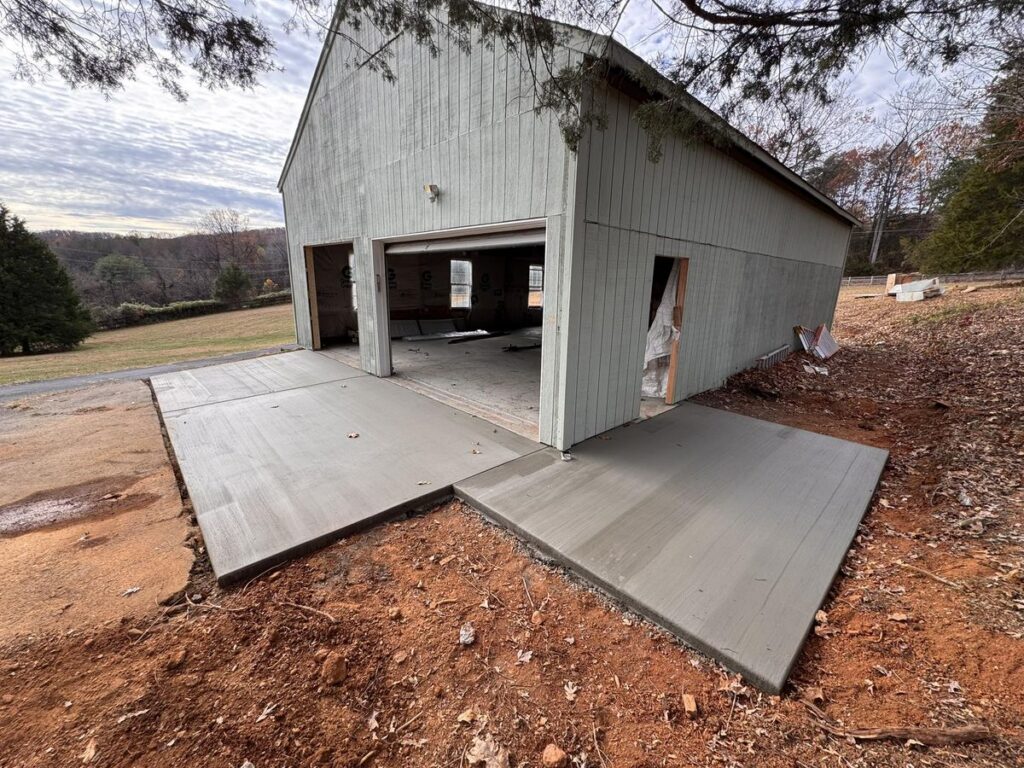
Sticker price favors asphalt, and on a big surface the gap is real money. A 600 square foot driveway might run $2,500 to $4,500 in asphalt against $5,000 to $8,500 in concrete, and nobody should pretend that difference does not matter to a household budget.
Ownership cost tells a different story. Asphalt wants sealcoating every two to three years, crack filling in between, usually a resurfacing around the middle of its life, and full replacement somewhere past year twenty. Concrete wants sealing every two to three years and very little else for decades. Spread each surface’s total cost across its lifespan and concrete usually lands at a lower cost per year, which is the number that actually describes what you paid.
How each surface handles Virginia weather
Our climate stresses both materials, just in different ways. Asphalt is flexible, which helps it ride out freeze and thaw movement, but it softens in July heat, where tires can scuff and rut it and a kickstand can sink straight into it. Its dark surface also bakes, holding heat well into a summer evening.
Concrete stays rigid and unbothered by heat, reflecting sun instead of absorbing it, and it handles our winters well when it is poured with an air entrained mix and sealed on schedule. Its weakness is deicing salt, especially in its first winters, so concrete owners trade the salt bag for sand. Freeze and thaw cycles attack both surfaces in the end, which is why installation quality decides more about lifespan around Warrenton than the material itself does.
Looks, feel, and resale
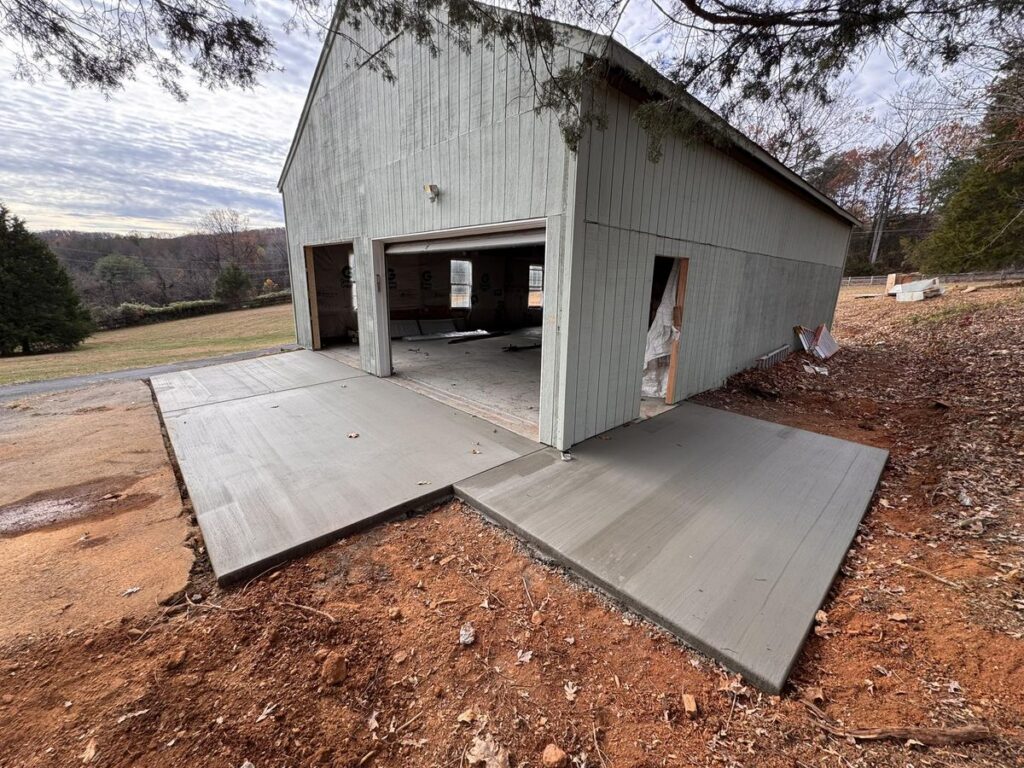
Concrete offers range. Broom finish for clean and classic, exposed aggregate for texture, and stamping or coloring where the driveway is part of the home’s face. Asphalt offers black, which looks sharp when fresh and fades toward gray as it oxidizes, with sealcoating restoring the color every few seasons.
Buyers notice driveways more than sellers expect, and a concrete driveway in good shape reads as a premium, permanent feature on a walkthrough. There are practical textures to weigh too. Concrete stays firmer under basketball hoops, trailer jacks, and motorcycle stands, and it does not track soft residue into the garage in August. Neither surface will make or break a sale by itself, but the driveway is the first thing a visitor touches, and it sets an expectation for everything past it.
When asphalt honestly makes sense
A quarter mile lane out past Warrenton is asphalt or gravel territory, because paving that distance in concrete is a serious capital project. Asphalt also suits owners planning to sell within a few years who want fresh curb appeal at the lowest cost, and it can be installed a little later into cold weather than concrete, which matters at the edges of the season.
If the driveway is a normal residential size and you plan to stay in the house, the math tilts to concrete. Longer life, less upkeep, better summer behavior, and more design options. That is not a sales line so much as the way the two materials age on the same street, and any street old enough will show you.
Bottom Line
Asphalt wins on the day you pay for it, and concrete wins most of the twenty five years after that. Around Warrenton and Northern Virginia, a properly poured concrete driveway outlasts asphalt by a decade or more while asking for less along the way. MG Minor Construction pours driveways built for this climate across Fauquier, Prince William, and Loudoun counties, with itemized quotes so you can run the comparison on real numbers. If your driveway is due for replacement, get bids on both surfaces, then call us.
Related reading: our concrete driveways services, How Often Should You Seal Concrete in Northern Virginia, Concrete Cracks: Which Are Normal and Which Are Trouble


