
How Late in the Fall Can You Pour Concrete in Northern Virginia
Every fall, the phone calls take on a certain urgency. The deck project wrapped up late, the new garage finally has its permit, and the driveway did not survive another summer. The question is always the same. Can we still pour before winter?
Usually yes, and fall is genuinely great pouring weather in Northern Virginia. But the freeze sets a real deadline, and the calendar in front of it fills fast. Here is how late concrete can go in around Warrenton, and how crews protect a slab when the season turns early.
How late in the year can you pour concrete in Northern Virginia?
Around Warrenton, exterior concrete pours comfortably through late October and often into November, as long as daytime temperatures hold in the 40s and 50s and nights are not dropping hard below freezing. New concrete needs to gain its early strength before the first hard freeze, which typically arrives here in November.
The date on the calendar matters less than the week of weather after your pour. A slab poured during a mild stretch of early November can cure beautifully, while one poured ahead of an October cold snap needs real protection. Experienced crews schedule off the extended forecast, not the month.
Why the freeze is a hard deadline
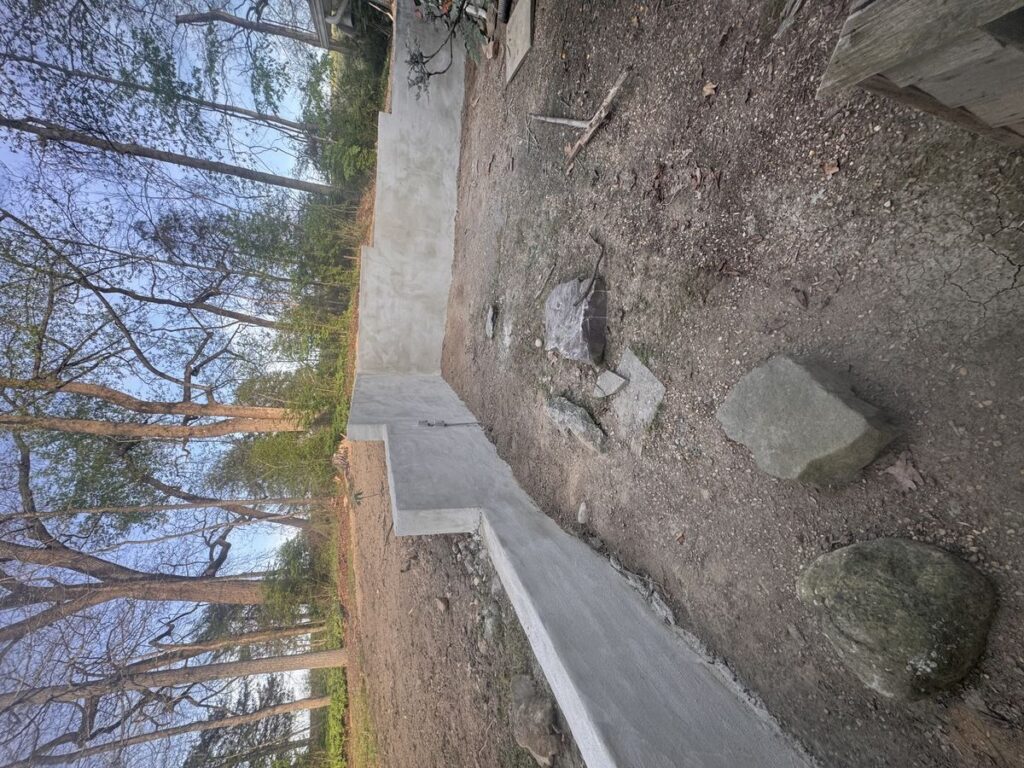
Curing is a chemical reaction that slows as temperatures fall, and it fails outright if the water inside fresh concrete freezes. Concrete that freezes in its first days can permanently lose a large share of its strength, and no amount of warm weather afterward buys it back. The slab looks fine and simply is not.
The good news is that the critical window is short. Fresh concrete that reaches roughly 500 PSI, which takes a day or two in decent weather, can shrug off a light frost, and every mild day after that adds margin. This is why late season pours get scheduled around forecast windows, and why the first 48 hours get all the attention from a good crew.
The booking math every fall
Here is the part that catches homeowners. The last comfortable pour dates of the year are also the most requested, because every project that slipped through summer converges on September and October. Quality crews in Fauquier and Prince William County book those weeks well in advance.
If you want an October pour, the quote and contract should be happening in August or early September. Waiting until the leaves turn to start collecting bids usually means choosing between a rushed crew, a winter pour with cold weather costs, or waiting for April. The projects that beat the freeze are the ones that started their paperwork early, and the estimate itself costs nothing but a walk around the yard. If your job needs demolition, HOA approval, or a permit, add a buffer week for each, because none of those steps compress once the season tightens.
How crews protect a late season pour
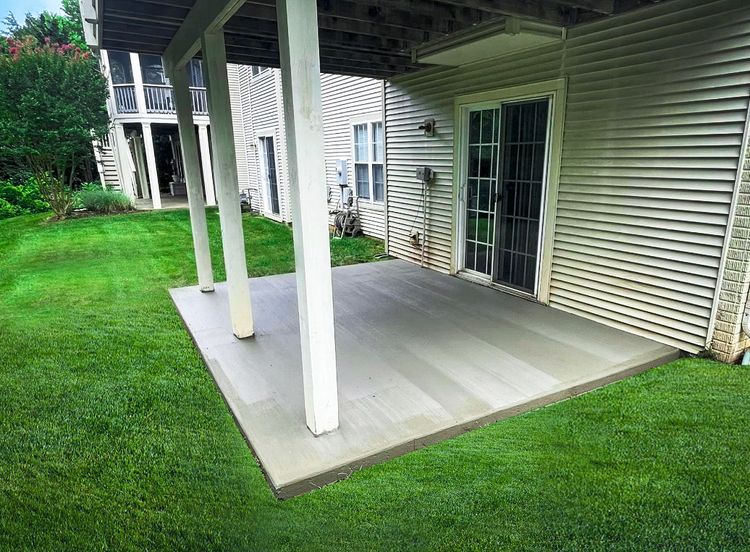
Cold weather concreting is a known discipline, not improvisation. As temperatures slide, crews adjust the mix with accelerators so it gains strength faster, sometimes use heated water at the plant, and pour early in the day so finishing wraps up before the evening chill. The fresh slab then gets covered with insulated curing blankets that trap the heat concrete generates as it cures.
Ground condition is the one thing no technique overcomes. Concrete never goes over frozen base, because a slab poured on frost will settle when the ground thaws under it. If your contractor postpones a morning pour because the subgrade is frozen, that is not a delay problem. That is the professionalism you hired.
A new slab’s first winter
Concrete poured in fall meets winter as a newborn, so it earns special treatment for one season. Keep every deicing salt off it the first winter, and ideally the second, using sand for traction instead. Salt attacks young concrete surfaces hardest, and most first winter scaling we see traces back to a well meaning bag of ice melt.
Sealing waits until the concrete finishes curing, usually about a month after the pour, and if temperatures have fallen too far by then, sealing can simply happen in spring with no harm done. Keep downspouts from discharging across the new slab, since standing water plus freezing nights is exactly the combination a young slab does not need. By its second winter, the concrete is fully itself and asks only for normal care.
Bottom Line
Fall pours work beautifully in Northern Virginia through late October and often beyond, provided the forecast cooperates and the crew knows cold weather methods. The real constraint is the calendar, because everyone else wants those same weeks. MG Minor Construction schedules fall driveway, patio, and slab pours across Warrenton, Gainesville, and Manassas, and we will tell you honestly whether your project fits before the freeze or belongs in the spring lineup. If you are hoping to pour this fall, reach out now while the good dates are still open.
Related reading: our concrete driveways services, Sidewalk Trip Hazards: Repair Options That Actually Work, What Separates a Good Garage Slab From a Future Problem


