
Do You Need a Retaining Wall: Signs to Watch For
Northern Virginia was not built on flat land. From the hills around Warrenton out through Gainesville and Haymarket, plenty of beautiful lots come with real slopes, and slopes come with physics. Soil wants to move downhill, and given enough rain, it will. Every July thunderstorm proves the point somewhere in Fauquier County.
A retaining wall is how you tell the ground where to stop. The trick is recognizing when your yard has started asking for one, because the signs show up long before anything dramatic happens. Here is what to watch for.
How do you know if your Warrenton home needs a retaining wall?
Watch for soil washing out after storms, mulch or gravel that keeps sliding downhill, water pooling against your foundation, slopes creeping toward the house or driveway, and any existing wall that leans, bulges, or cracks. Each of those means the ground is moving, and moving ground does not stop on its own.
None of these signs are emergencies on day one. That is exactly what makes them easy to ignore, and exactly why the homeowners who act on them early spend far less than the ones who wait for the slope to make the decision for them.
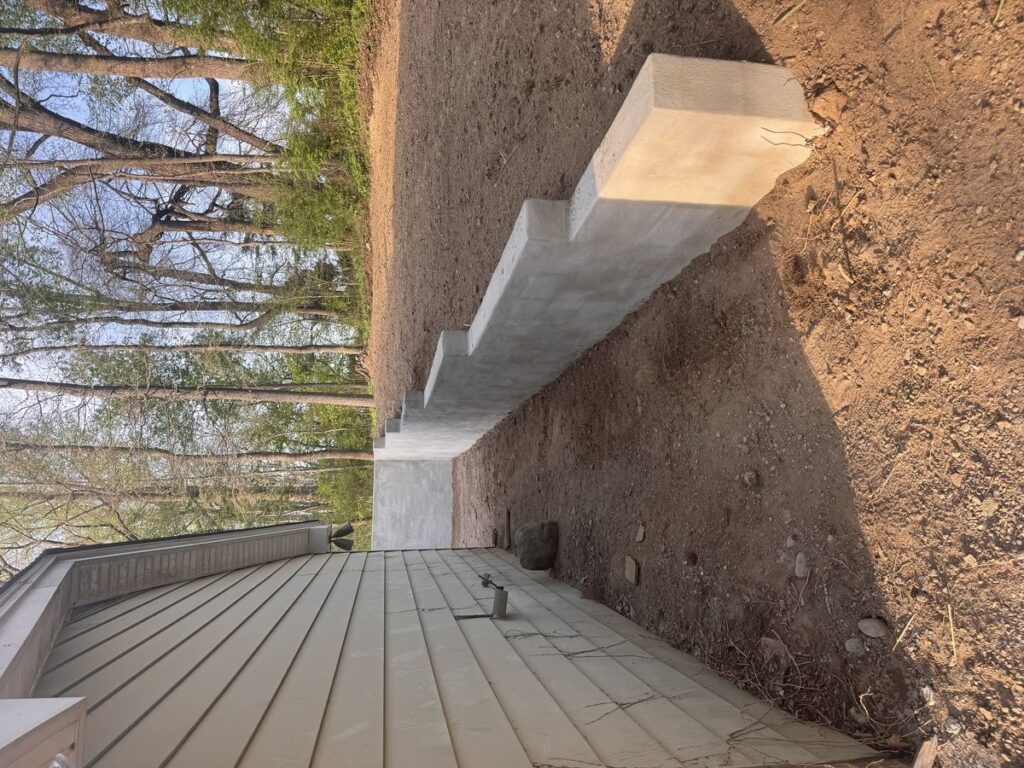
Erosion that gets worse with every storm
The clay heavy soil around Warrenton absorbs water slowly, which means a hard summer storm sends most of its rain racing across the surface, carrying soil with it. If you see small gullies cutting into a slope, tree roots gradually becoming exposed, or dirt and gravel washing onto your walkway after every downpour, erosion has picked its path.
Each storm digs that path a little deeper, and replacing mulch every spring is treating the symptom. A properly placed retaining wall breaks the slope into terraces, slows the water down, and holds the soil where you paid for it to be. As a bonus, terraced ground turns unusable hillside into flat, plantable, livable yard. Many of our Warrenton wall projects started as erosion complaints and ended as the best usable space on the property.
Water going where it should not
Grading and drainage problems love to masquerade as landscaping problems. Water pooling near the foundation, a section of yard that stays soggy for days, or moisture showing up in the basement after storms all point to ground that is directing water toward your house instead of away from it. In winter, that same water freezes against the foundation and compounds the problem.
A retaining wall built with proper drainage changes that math. Quality walls are more than stacked material: they include gravel backfill and drain pipe that collect water behind the wall and move it somewhere harmless. That hidden drainage layer is the difference between a wall that lasts generations and one that becomes its own problem, and it is a big part of what you are paying a professional crew for.
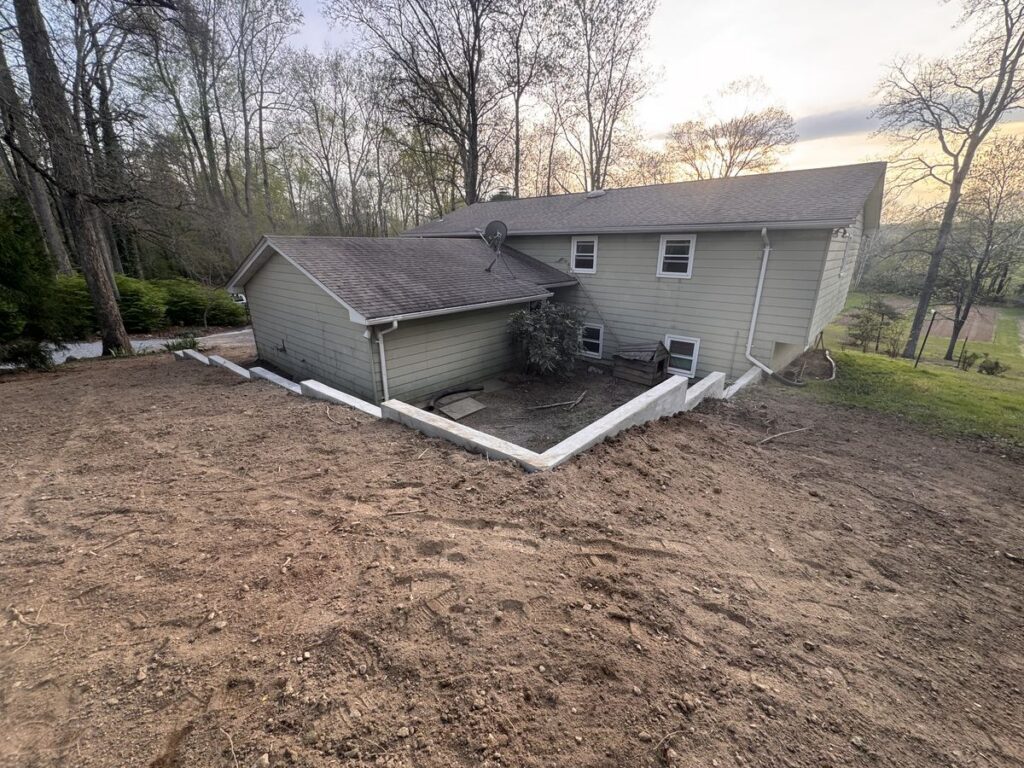
Slopes and structures getting too close
Ground creep is slow but relentless. Fence posts that used to stand straight begin to tilt, the edge of a driveway starts dropping or cracking as the ground beside it sinks, and a shed or patio at the base of a hill slowly collects the hillside. These are all signs the slope is moving toward something you care about.
Anywhere soil movement meets a structure, a retaining wall earns its cost quickly. Rebuilding a driveway edge or releveling a patio costs far more than holding the ground back in the first place. If you are planning a new patio, pool, or addition on a sloped Warrenton lot, plan the wall at the same time, since regrading is a whole lot easier before the concrete goes down. Good site planning solves in one mobilization what reactive fixes spread expensively across three.
An existing wall on its way out
Many Northern Virginia homes already have retaining walls, and plenty of them are aging out. Timber walls from decades past rot from the soil side and rarely last much beyond twenty years. Block and stone walls fail more slowly, but a lean you can see, a bulge in the middle, stair step cracks in mortar, or soil leaking through gaps all say the wall is losing its grip. If you are unsure whether movement is active, take a photo now and compare it after a wet month.
A leaning wall never straightens itself, and full failure tends to arrive during the same soaking storm that stresses everything else. Replacing a failing wall on your schedule is a controlled, plannable project. Cleaning up a collapsed one, along with everything it was holding, is not. Taller replacements may also need engineering and permits, which a professional builder handles as part of the job.
Bottom Line
Washouts, sliding slopes, pooling water, and a leaning or cracking wall are your yard’s early warnings, and catching them early keeps the fix affordable. A well built retaining wall stops the movement, manages the water, and often hands you usable yard you did not have before. MG Minor Construction designs and builds retaining walls across Warrenton and Northern Virginia with the drainage and base work that make them last. If your slope is showing any of these signs, have us take a look before the next big storm does.
Related reading: What a New Concrete Patio Costs in Warrenton, Best Time of Year to Pour Concrete in Northern VA


