
How Long Does a Concrete Driveway Last in Northern VA
A driveway is the biggest slab of concrete most homeowners will ever own, and it earns its keep every single day. So when Warrenton homeowners ask us how long a new driveway will last, they deserve a real answer, not a shrug and a sales pitch.
The honest answer is that lifespan is mostly decided before the concrete truck ever arrives. Here is what to expect from a driveway in Northern Virginia, and what separates the ones that fail early from the ones still solid at year forty. The same rules apply in town, out in the county, and everywhere in between.
How long does a concrete driveway last in Northern Virginia?
A properly installed concrete driveway lasts 25 to 40 years in Northern Virginia, and plenty go longer with basic care. The difference between a driveway that cracks apart at 12 years and one thriving at 35 comes down to base preparation, the right concrete mix, and a little routine maintenance.
That range assumes the job was done right. Around Warrenton we regularly tear out driveways that failed decades early, and the autopsy almost always shows the same causes: a skimped base, the wrong mix for our climate, or joints cut wrong or not at all.
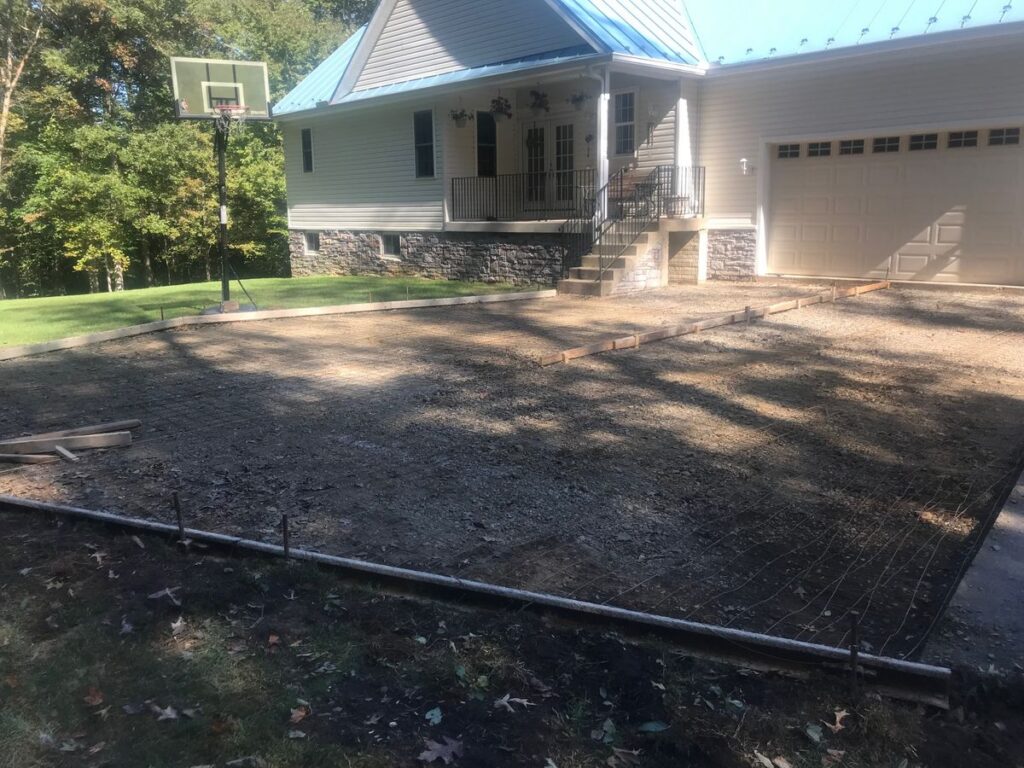
What Warrenton weather does to concrete
Northern Virginia sits in a rough zone for concrete because our winters hover around the freezing line instead of staying put. Water soaks into the surface, freezes, expands, thaws, and repeats, sometimes dozens of times in a single winter. Those freeze and thaw cycles pry at the surface of weak concrete until it flakes and scales. The damage is slow, then sudden, which is why a driveway can look fine for a decade and then seem to fall apart in two winters.
Our soil adds its own pressure. Much of the Warrenton area sits on clay, which swells when wet and shrinks when dry, shifting whatever sits on top of it. Add the deicing salts that wash off vehicles and roads, which accelerate surface damage, and you can see why a mix designed for Florida has no business being poured in Fauquier County. Local mix designs exist for exactly this reason.
The installation choices that add decades
Longevity starts underground with a properly compacted stone base, because concrete is only as stable as what it rests on. From there, the slab needs the right thickness, four inches for cars and more where trucks will sit, along with reinforcement suited to the job. Skipping base compaction to save a day is the most common shortcut we find beneath failed slabs.
The mix itself matters just as much in our climate. Exterior concrete here should be an air entrained mix at around 4,000 PSI or better, which gives freezing water microscopic room to expand without breaking the surface. Then come control joints, cut at the right depth and spacing so the slab cracks where we planned instead of where it pleases, and a proper cure, which means keeping vehicles off the new slab for about a week.
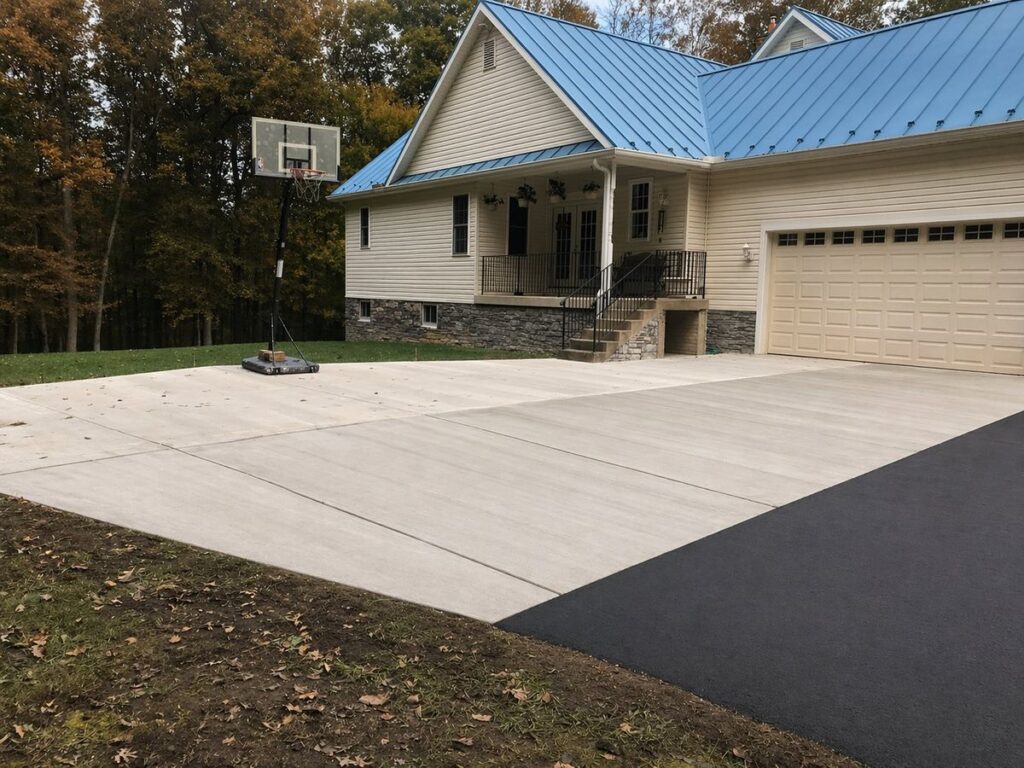
Maintenance that pays for itself
Concrete is famously low maintenance, but low is not zero. Sealing the surface every two to three years blocks water and salt from soaking in, which is most of the battle in a freeze and thaw climate. It is a small job that meaningfully stretches the life of the slab.
Beyond sealing, skip harsh deicers, especially in the driveway’s first two winters, and use sand for traction instead. Clean up oil promptly, and keep downspouts from dumping water along the slab edges where it can wash out the base. None of this takes more than a weekend hour here and there, and it is the difference between aging gracefully and aging fast. If you cannot remember the last time your driveway was sealed, that is your answer.
Signs a driveway is near the end
Every driveway collects a few hairline cracks, and those are cosmetic. The serious signals are widespread connected cracking, deep flaking that exposes the gravel in the mix, and sections that have settled so the surface no longer drains away from your garage or foundation. Standing water on the slab is its own warning, because every freeze turns that puddle into a wedge.
Once slabs start moving independently or the surface sheds material every winter, patching becomes a treadmill. At that point replacement is usually the better spend, because you are no longer fixing a driveway, you are delaying a decision. An honest contractor will tell you which side of that line yours is on. A resurfacing overlay can buy time in borderline cases, but only when the base underneath is still doing its job.
Bottom Line
Expect 25 to 40 years from a concrete driveway in Northern Virginia when the base, mix, joints, and curing are done right, and a good bit less when they are not. Sealing every few years and easy habits protect the investment. MG Minor Construction pours driveways across Warrenton, Gainesville, Manassas, and the rest of Northern Virginia, built specifically for this climate. If your driveway is nearing the end or you are planning a new one, reach out for a straight assessment and a detailed quote.
Related reading: our concrete driveways services


